Dynamic Fuel Surcharge
Fuel surcharges are calculated from current market rates and each carrier's own formula. The charge lands on the shipment automatically, with the calculation visible on the invoice.
Apply fuel surcharges, duties, handling, and storage fees automatically at the time of booking, so customers see the true cost of every shipment up front.
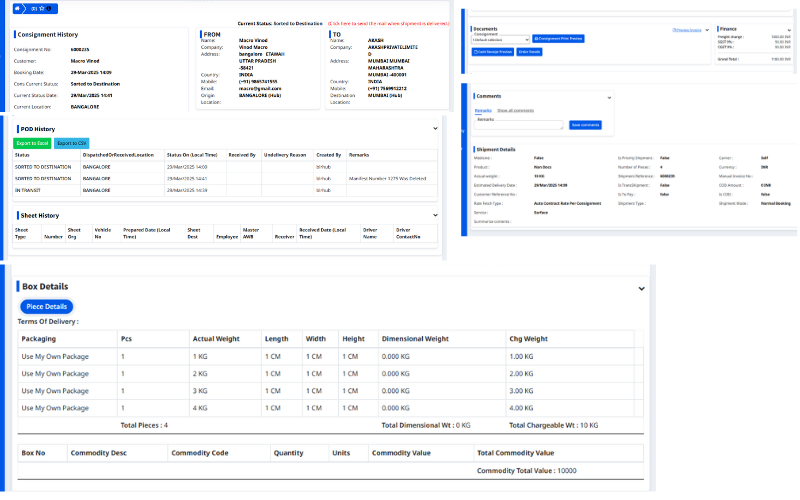

Set a charge rule once and the software applies it to every qualifying booking. No more checking rate cards by hand at billing time.
Fuel surcharges are calculated from current market rates and each carrier's own formula. The charge lands on the shipment automatically, with the calculation visible on the invoice.
Pincode mapping identifies remote delivery locations on its own and adds the right surcharge. No one has to check location lists by hand, and hard-to-reach deliveries still recover their cost.
Optional cover based on the shipment's declared value. Charges scale with the risk, so shipments aren't over- or under-insured.
Applied when a shipment exceeds standard size or weight limits. The extra handling the shipment requires gets billed rather than absorbed.
Covers documentation, inspections, and compliance work for cross-border shipments. Charges can be adjusted to include extras like expedited processing or consultancy.
Applied to fragile, hazardous, or sensitive shipments that need extra care in transit. The fee covers special packaging, safety precautions, and the tools required to move them safely.
Charged for deliveries outside regular hours. Rates can vary by urgency, location, or schedule, giving customers an option when a shipment can't wait until the next business day.
What each charge type covers and how the calculation works.
The system checks current market rates and the carrier's own formula every time a surcharge applies. Rates update as fuel prices move, and the calculation for each shipment is recorded for billing.

When a booking comes in, pincode mapping decides whether the destination counts as remote and which surcharge tier applies. The charge follows the location automatically instead of relying on someone to catch it.

Insurance is optional and priced on the shipment's declared value. Coverage protects against loss, damage, or theft in transit, and the charge scales to match the risk involved.

Shipments beyond standard size or weight limits need extra equipment, labor, or vehicle space. These charges recover that cost so standard shipments don't subsidize heavy ones.
Cross-border shipments often involve paperwork, inspections, and compliance checks before they can move forward. These charges cover the work involved in getting the shipment through this process and can include extra services such as expedited processing or consultancy.

These fees are for fragile, hazardous, or sensitive shipments that need a bit more care while they’re in transit. They cover things like special packaging, safety precautions, and the tools needed to move the shipments safely.

Some deliveries can't wait for the next business day. These fees cover work outside standard hours, with rates that vary by urgency, location, or schedule.

Charge rules attach to each customer's contract terms. Once set, the software applies them to every booking without anyone re-entering rates.
Surcharges captured at booking are revenue that used to slip through at invoicing. The engine applies every rule the customer's contract qualifies for.
Multi-carrier pricing leaves plenty of room for human error when calculated by hand. Automated calculation removes that risk from the process.
Every invoice breaks out base rates and surcharges line by line, which cuts down the disputes and pricing questions that follow customers after delivery.
Rule priority runs on a hierarchical logic tree. Global rules set the baseline, then customer-specific or service-level overrides layer on top. The most specific rule wins at calculation time.
Yes. Regional zones can be mapped down to postal code level, with specific multipliers or flat fees applied by origin-destination pair or across an entire territory.
A published rule propagates across the Softpal ecosystem immediately. Any booking or quote generated after you save reflects the updated calculation logic.
Over 1,200 logistics enterprises use Softpal to apply surcharges automatically and keep their margins intact.